
Communicating Collaborative Restoration and Monitoring for PNW Salmon
Using Film to Highlight the Effort to Save Salish Sea Salmon
Project Brief
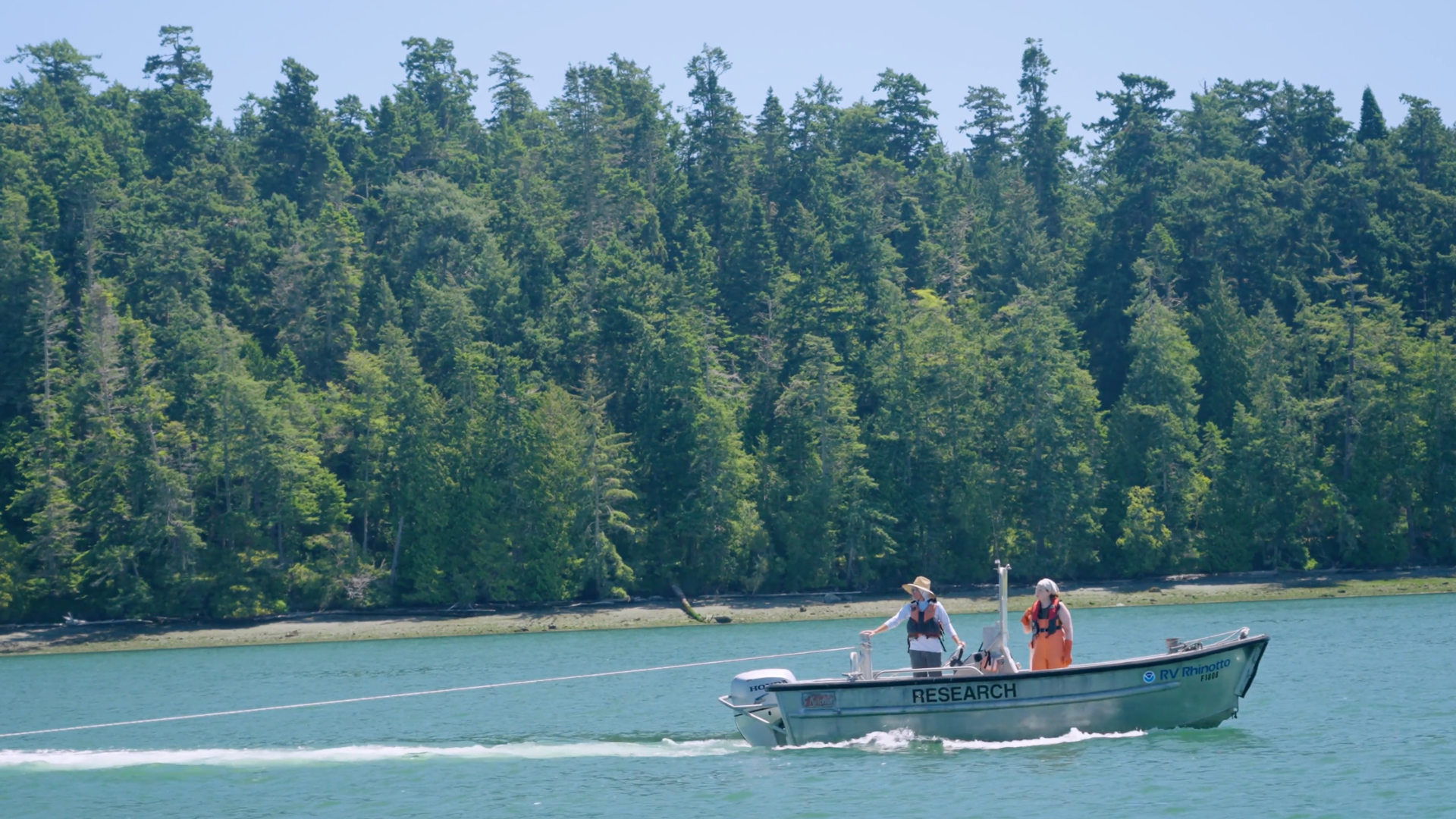
S&S partnered with Allan Luebke and the Puget Sound Ecosystem Monitoring Program to film and produce a 15-minute documentary, illustrating how rigorous long-term habitat monitoring serves as the essential roadmap for restoration. The film moves beyond high-level science to showcase a community-wide movement, emphasizing that salmon recovery is both an ecological foundation and a shared cultural responsibility.
Objectives
Showcase estuarine and nearshore restoration methods and the rigorous, long-term monitoring required to document success.
Ignite a passion in the next generation of students by highlighting accessible pathways to get involved in restoration efforts.
Translate high-level ecological concepts into an engaging, accessible story that empowers non-scientific audiences to understand and advocate for a healthy Puget Sound.
Context
The heartbeat of the Salish Sea is embodied by the salmon that pulse through its vibrant waters—connecting the ocean with inland watersheds and bolstering spiritual and economic values. Despite their resilience, habitat degradation, urban encroachment, and the intensifying pressures of climate change have pushed many populations of Salish Sea salmon to the brink of extinction.
Collaboration
This project was a collaborative effort spearheaded by the Puget Sound Ecosystem Monitoring Program and its Forage Fish and Salmonids Work Groups. Much of the work featured in the film was funded through the Puget Sound Partnership by the U.S. Environmental Protection Agency. S&S coordinated the project and interviews alongside the film’s director, Allan Luebke.
The film features nine interviews from tribal, federal, and state agencies. Additionally, the film features footage courtesy of over 25 institutes. This film demonstrates the power of collaborative management and restoration efforts.
-
Director
Allan Luebke
Producers
Anna Kagley
Correigh Greene
Project Coordinator
Katy Bear Nalven, Sea & Shore Solutions
Archival Producer
Jacob Adams
Audio Post
Eric Stolberg, Digital One
Interviews
Aaron Jones: Director, Natural & Cultural Resources Department, The Tulalip Tribes
Anna Kagley: The Tulalip Tribes, NOAA Research Fishery Biologist (1987-2025)
Chelsea Korbulic: Outreach and Engagement Specialist, NOAA Affiliate
Devin Robinson: Biologist, The Tulalip Tribes
Jamey Selleck: Marine Ecologist, Natural Resource Consultants
Justin Stapleton: Project Biologist Lower Elwha Klallam Tribe
Michelle Totman: GIS Analyst, The Tulalip Tribes
Mike LeMoine: Director of Research and Recovery, Skagit River System Cooperative
Paxton Calhoun: MES - NOAA Affiliate, Junior Scientist
Appearances
Alan Clark
Amanda Hurley
Andrew Williams Jr.
Andrew Williams III
Britta Timpane-Padgham
Correigh Greene
Delaney Casten
Dennis Newman
Elena Prest
Gabe Ritchie
James Losee
Jared Busen
John Montine
Joshua Chamberlin
Kaimona Williams
Kinsey Frick
Kolten Ollom
Lauren Christian
Len Kopek
Matt Pouley
Oleg Litvintsev
Robert Joseph Snider
Rowan Loidhamer
Sky Greene
Todd Zackey
Zoe Reiss
Footage Courtesy
Bob Turner
City of Seattle
Internet Archive
Library of Congress
MOHAI, Seattle Post-Intelligencer Collection
Motofish
Muckleshoot Indian Tribe
National Oceanic and
Atmospheric Administration
National Park Service
Northwest Indian Fisheries
Commission
Olympic National Park
Oregon State University
Paua Marine Research Group
Seattle Municipal Archives
Swinomish Indian Tribal
Community
Tulalip TV
U.S. Fish and Wildlife Service
U.S. House of Representatives
University of Washington
UW Special Collections
UW Wetland Ecosystem Team
White and Snohomish County
DCNR
Support From
Adam Obaza
Brett Shattuck
Casey Ralston
Cassandra Donovan
Daniel Spencer
Dawn Spilsbury
Dayv Lowry
Heather Spore
Jason Toft
Justin Salva
Kevin Cody
Kim Mai Pham
Lance Campbell
Lisa Terry
Liz Duffy
Lower Elwha Klallam Tribe
Melissa Gobin
Michael Rustay
NW Fisheries Science Center
Northwest Treaty Tribes
Paul Hillman
Sarah Morley
Skagit River System Cooperative
Su Kim
The Tulalip Tribes
Willamette Cultural Resources Associates
Strategy
S&S acted as the bridge between scientific expertise and creative execution. We worked with PSEMP and salmon ecologists to identify key messages and audiences, and then we managed the logistics by collaborating with the director to organize filming schedules and develop a focused interview guide.
Beyond the final edit, S&S maximized the documentary’s reach by securing a showing at the Oregon Chapter of the American Fisheries Society Annual Meeting and developing a comprehensive social media toolkit, which provided partners with assets to amplify the film’s impact.
Science
This documentary is an immersive experience illustrating the science of habitat restoration and long-term monitoring through the eyes of multiple collaborative partners. The film is a pathway for scientists and restoration experts to share their stories and showcase the impact of their work beyond technical reports and publications. With the diverse perspectives and allied narratives, the film demonstrates how experts can create connections that resonate.
This film follows restoration projects and monitoring programs such as fyke netting, beach seine sampling, pair trawling/townetting, vegetation surveys, soil pit sampling, drone surveys, and kayak kelp canopy surveys. Together, these monitoring programs provide data that helps to forecast the health of the ecosystem. This is the power of PSEMP—bringing people together to synthesize data from multiple sources into a clear, actionable understanding of the Puget Sound. With this level of organized, networked collaboration, the project team is able to paint a truly complete picture of the ecosystem.
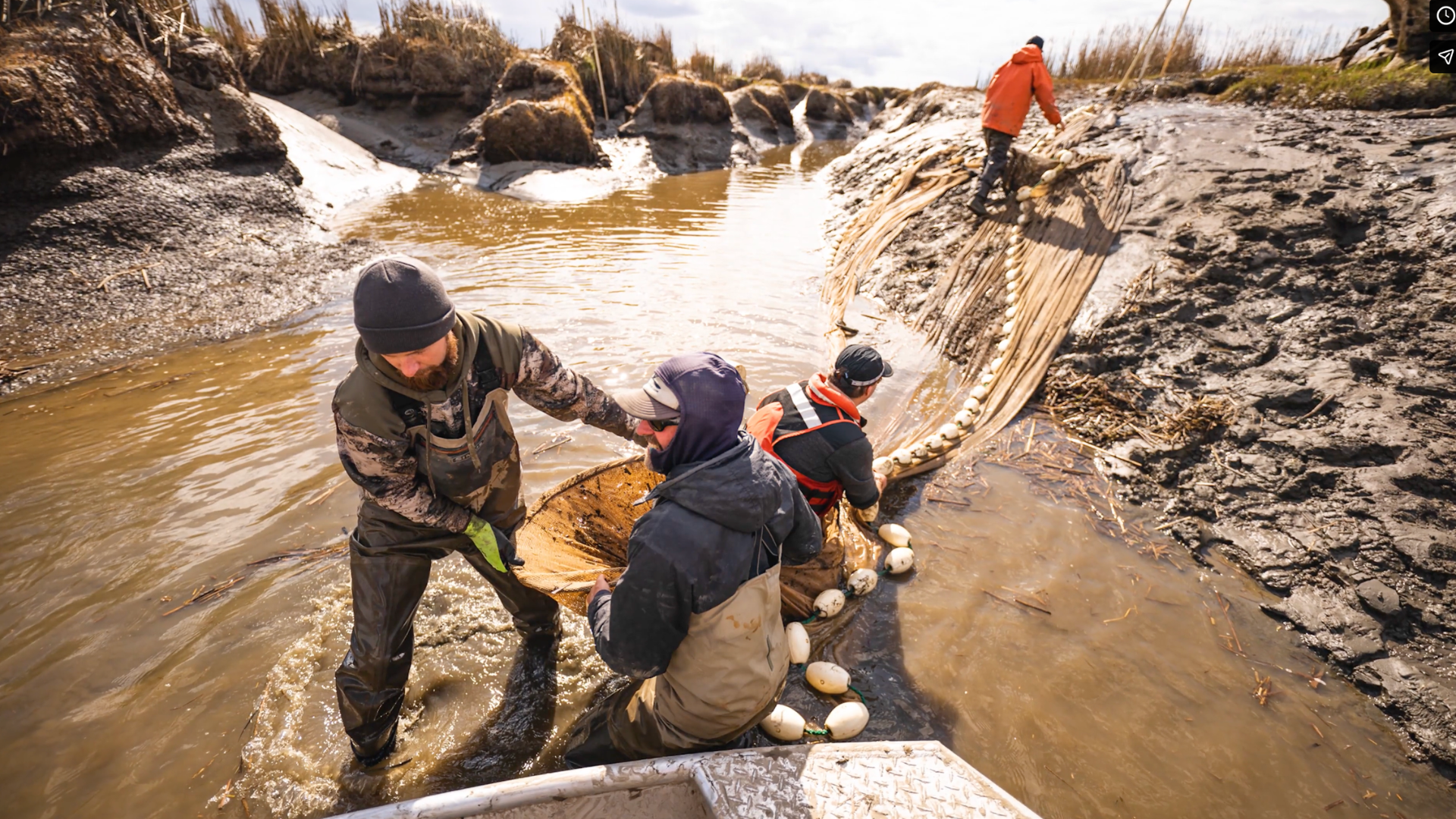
Fyke Trap
Place a net across the water within an upper river system or tributaries. When the tide drops, fish are then funnelled into the net. Researchers will then catch, measure, and release the fish.
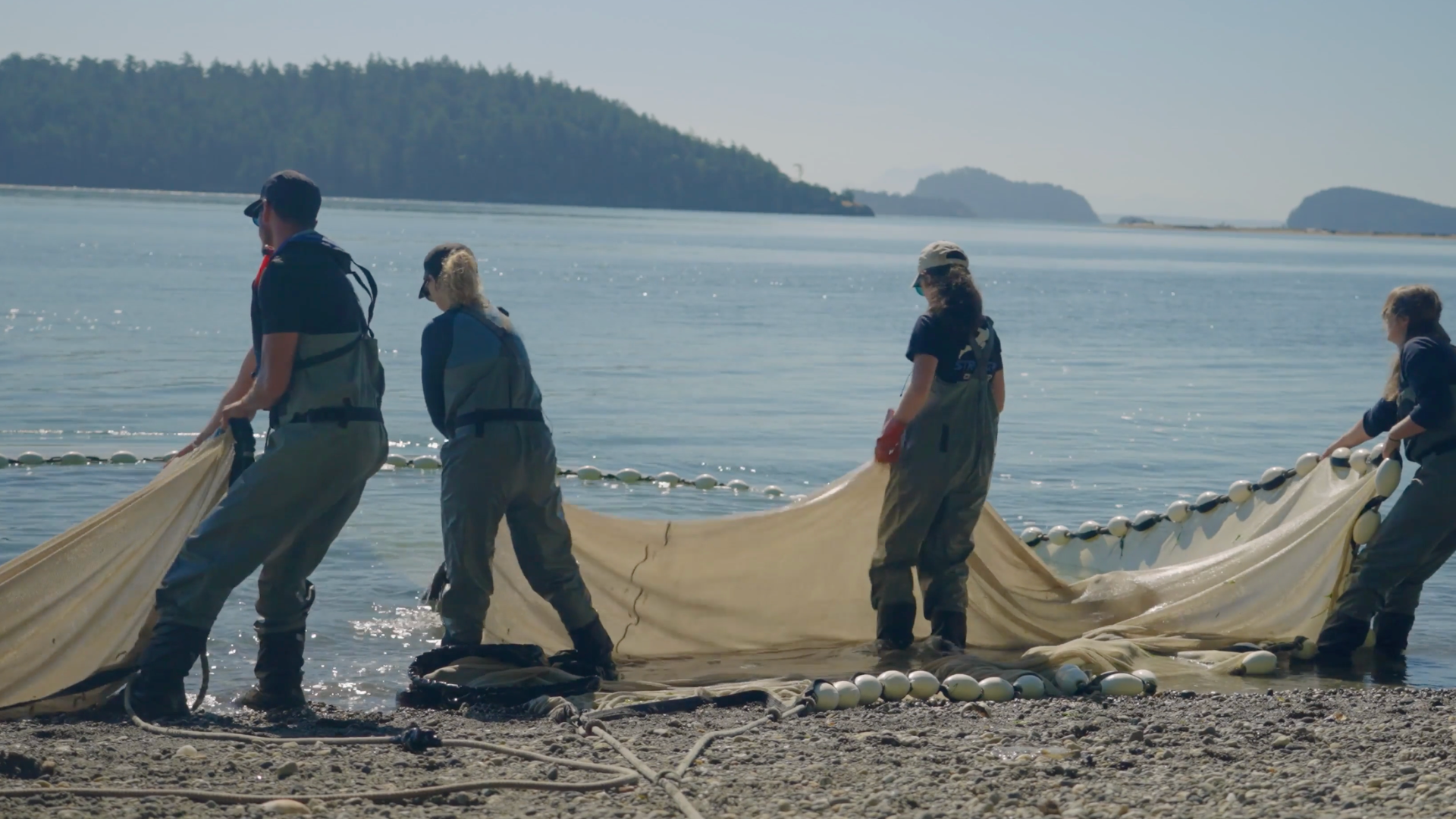
Beach seine
Set a net in a horseshoe shape to the shore, which captures fish for data collection. Researchers weigh and measure all collected fish before releasing them back into the water.
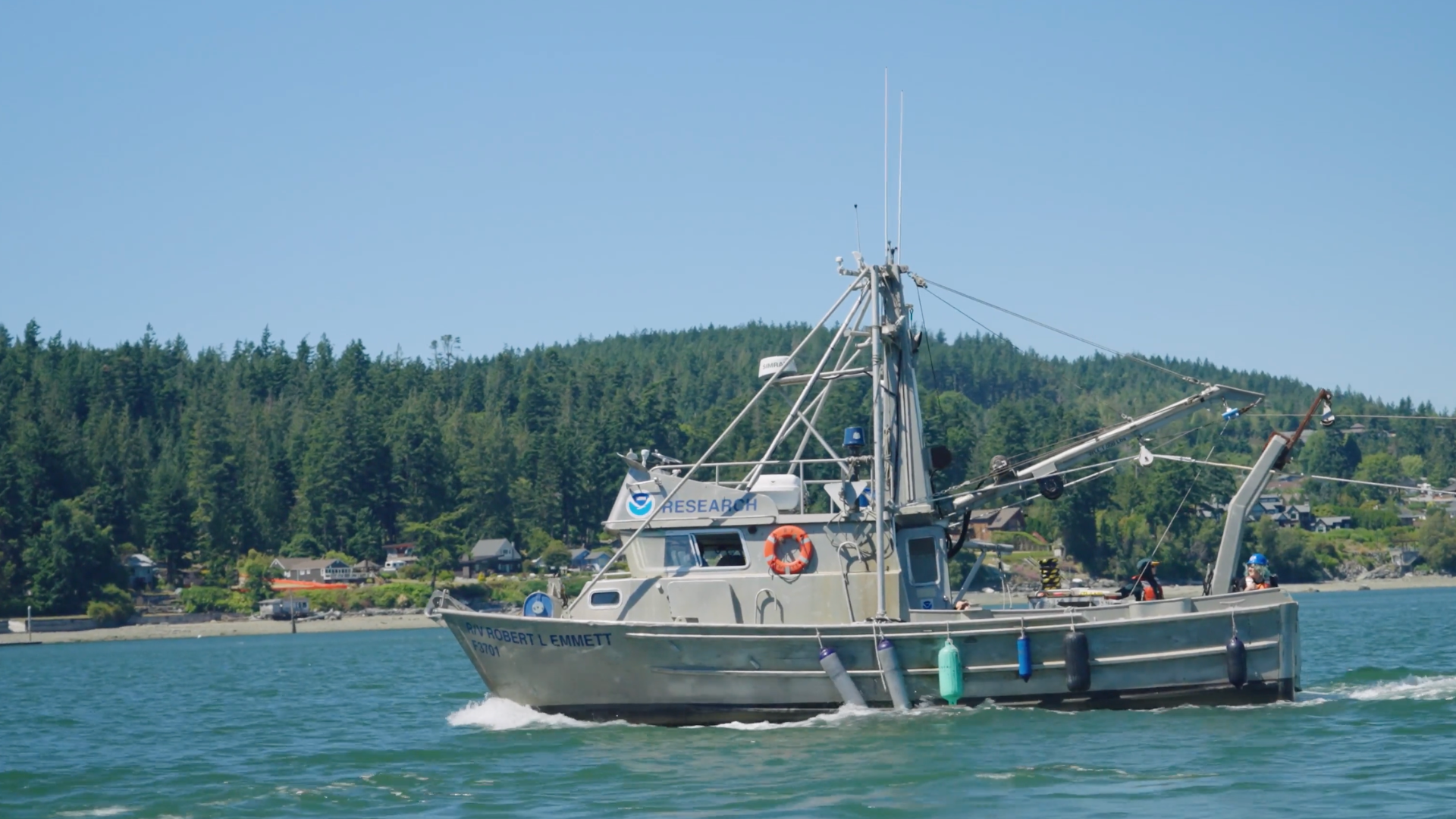
TowNet
Pull a net between two vessels in the open ocean to capture fish in deeper waters. This allows researchers to measure and weigh salmon across their life cycle.
Innovation
The collaborative efforts to save Salish Sea salmon are innovative in their own right. The film captures how data-driven decisions at the agency level connect directly to local volunteer efforts and Tribal stewardship. By shifting away from siloed efforts to a networked approach that weaves together Tribal leadership, state mandates, and federal monitoring, this project is trailblazing a new future for effective restoration and management programs. The documentary illustrates a rare, holistic ecosystem for salmon recovery. It is a showcase of a modern, multidisciplinary engine for environmental change that sets a new standard for saving Salish Sea salmon.
Outcomes
“This video explains, in such a comprehensive way, why we need long-term monitoring to track the health of our ecosystems, while celebrating the partnerships and effort it takes to achieve that. The message of how accessible it is to be part of this community, and learn to do what we do, leaves us with such hope and inspiration.”
Dawn Spillsbury, PSEMP Salmonid Work Group Coordinator
“There are some amazing videos in the public realm that individually feature salmon habitat restoration, multi-agency governmental research, internships, and even tribal co-management. I wanted to take it one step further and highlight the importance of continuing to monitor the dramatic increase in successful outcomes when all these efforts are combined into one beautiful, cohesive element.”
Anna Kagley, Capital Projects Coordinator for The Tulalip Tribes / NOAA Research Fishery Biologist (1987-2025)
Please contact Katy Nalven, katy@sea-shoresolutions.com, to learn more about this project or related work.
U.S. EPA: This project has been funded wholly or in part by the United States Environmental Protection Agency under assistance agreement CE-01J97401 to the Puget Sound Partnership. The contents of this document do not necessarily reflect the views and policies of the Environmental Protection Agency, nor does the EPA endorse trade names or recommend the use of commercial products mentioned in this document.